
Introduction

In today’s digital world, SEO (Search Engine Optimization) has become essential for any business looking to grow online. Think of SEO as the way to make your website visible to people searching for the products or services you offer. If your website isn’t ranking high on search engines like Google, your potential customers might never find you.

Having a strong online presence is no longer optional—it’s a must. Whether you’re running a small local business or a large company, appearing in search results can bring more traffic to your website, more leads, and ultimately, more sales.

Here’s a fact to think about: 75% of people never go past the first page of search results. This means if your business isn’t on that first page, you’re missing out on a huge number of potential customers. SEO is the key to solving this problem. It helps your business show up in the right place at the right time, making it easier for customers to find you and trust your brand. Let’s explore how SEO services can help your business grow.

Illustration of changes that should be made to the website to rank on google.

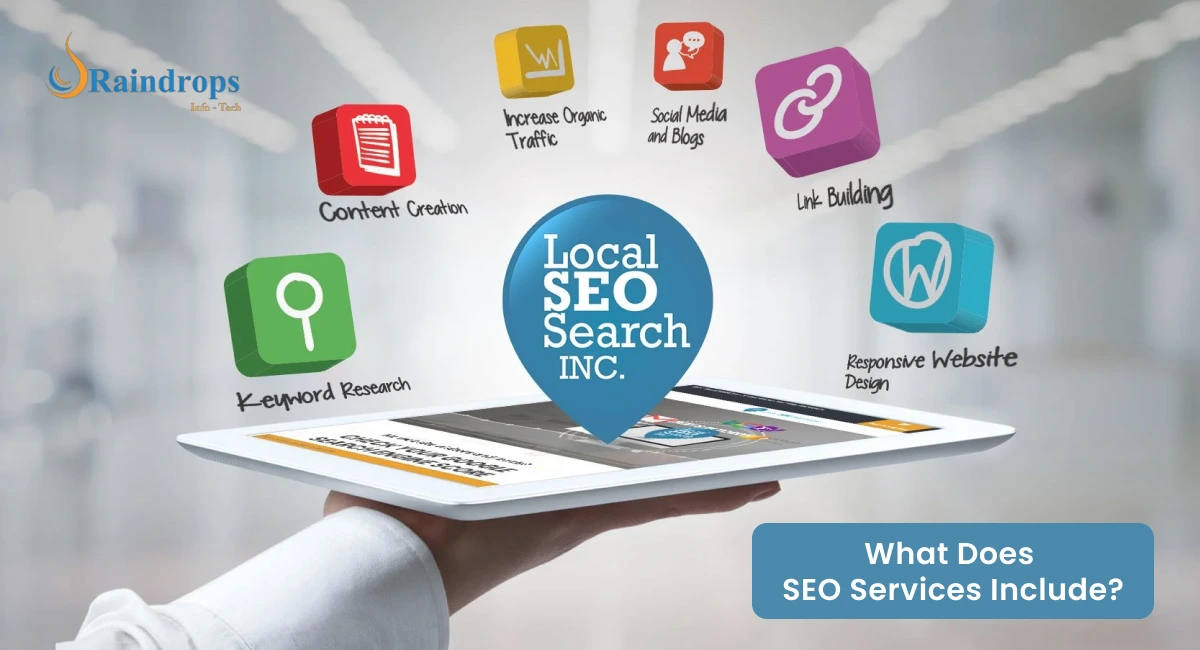
What Does SEO Services Include?

SEO services are like a toolkit designed to improve your website’s performance and visibility. Here’s what they usually involve:

  • point-icon

    Keyword Research: Finding the words and phrases your potential customers are searching for and using them strategically on your website.

  • point-icon

    On-Page Optimization: Tweaking your website’s content, meta descriptions, headers, and images to make it more search-engine-friendly.

  • point-icon

    Content Creation: Writing blogs, articles, and other content that answer your customers’ questions and solve their problems.

  • point-icon

    Technical SEO: Fixing behind-the-scenes issues like website speed, mobile-friendliness, and broken links to make your site easier to navigate.

  • point-icon

    Link Building: Getting other reputable websites to link to yours, boosting your website’s credibility in the eyes of search engines.

Let’s dive deeper into how these services can fuel your business growth.
blog 42 content image
discover-more-slide-shape

How SEO Services Drive Business Growth

SEO isn’t just about getting your website to the top of search results—it’s about creating opportunities for growth. When done right, SEO can transform how people find and interact with your business online. Let’s break down the key ways SEO helps businesses grow.

1. Improved Online Visibility

Imagine having a store in the middle of a bustling market but no one knows it exists. That’s what it’s like to have a website without SEO. With the right strategies, SEO can:

  • point-icon

    Boost Your Search Engine Rankings: Higher rankings mean your business is one of the first things people see when searching for services or products you offer.

  • point-icon

    Increase Organic Traffic: SEO helps attract people who are actively searching for what you provide, leading to more clicks, visits, and potential sales.

discover-more-slide-shape

2. Enhanced User Experience

Search engines prioritize websites that are easy to use. By improving your website’s structure and performance, SEO also enhances the experience for your visitors:

  • point-icon

    Faster Loading Times: Nobody likes a slow website. Optimized loading speeds keep users from clicking away.

  • point-icon

    Mobile Optimization: With so many people browsing on their phones, a mobile-friendly site ensures you don’t miss out on potential customers.

  • point-icon

    Better Navigation: A well-structured website makes it easy for users to find what they’re looking for, reducing frustration and bounce rates.

discover-more-slide-shape

3. Targeted Audience Reach

Search engines prioritize websites that are easy to use. By improving your website’s structure and performance, SEO also enhances the experience for your visitors:

  • point-icon

    Attract Relevant Visitors: Through keyword targeting, SEO connects you with people actively searching for your products or services.

  • point-icon

    Reach Customers at Every Stage: Whether someone is just starting to explore options or ready to buy, SEO can help guide them to your site at the right time.

discover-more-slide-shape

4. Boosting Credibility and Trust

A high-ranking website isn’t just more visible—it’s also more trusted. Here’s how SEO builds your reputation:

  • point-icon

    Domain Authority: Search engines favor websites with high-quality content and reputable backlinks, positioning you as an expert in your field.

  • point-icon

    Positive Reviews and Local SEO: Encouraging reviews and optimizing your local presence make it easier for nearby customers to trust and choose your business.

discover-more-slide-shape

5. Higher ROI Compared to Other Marketing Channels

Unlike paid ads that stop working once the budget runs out, SEO offers long-term benefits:

  • point-icon

    Cost-Effective Results: Organic traffic is free, making SEO a high-return investment.

  • point-icon

    Consistent Growth: With regular updates and effort, SEO keeps bringing in leads and customers over time.

By improving visibility, building trust, and reaching the right audience, SEO services create a solid foundation for sustainable business growth. It’s not just about being seen—it’s about turning visitors into customers and customers into loyal advocates for your brand.

discover-more-slide-shape

Common Misconceptions About SEO

Many people have heard of SEO but don’t fully understand how it works. Unfortunately, this can lead to some common misconceptions that might hold businesses back. Let’s clear up a few of the most widespread myths about SEO.

1. “SEO Is Only About Keywords”

It’s true that keywords are important in SEO, but they’re just one piece of the puzzle. SEO involves many other factors, such as how fast your website loads, how mobile-friendly it is, the quality of your content, and even the number of trustworthy websites linking back to yours. Think of keywords as the starting point, but the real magic happens when all these pieces work together to improve your search rankings.

2. “Results Are Instant”

SEO is not a quick fix—it’s a long-term strategy. Unlike paid ads, where you can see results immediately, SEO takes time because it involves building trust and authority with search engines. It’s like planting a tree: you won’t see it grow overnight, but with consistent care, it will flourish and provide lasting benefits.

3. “SEO Is a One-Time Effort”

SEO isn’t something you can set and forget. Search engines like Google are constantly updating their algorithms, and competitors are always trying to outrank you. To stay ahead, you need to regularly update your website, create fresh content, and adjust your strategies based on new trends and data. SEO is an ongoing process that requires continuous effort to keep delivering results.

By understanding and avoiding these misconceptions, businesses can approach SEO with realistic expectations and make the most of its potential to drive growth.

Tips for Choosing the Right SEO Service Provider

Choosing the right SEO service provider is a big decision. The right partner can help your business grow, while the wrong one can waste your time and money. Here are some simple tips to help you make the best choice.

1. Look for Experience and Proven Results

Always check how long the company has been in the SEO field and what results they’ve achieved for other clients. A good SEO provider will have a history of helping businesses improve their search rankings and grow their online presence. Ask for case studies or examples of their work to see what they’ve done in the past.

2. Ask About Their Strategies and Approach

A trustworthy SEO provider should be able to explain their strategies in simple terms. Ask them how they plan to improve your website’s rankings and what tools or techniques they use. Be cautious of anyone promising quick fixes or instant results—real SEO takes time and consistent effort.

3. Ensure Transparency in Reporting and Communication

Good communication is key when working with an SEO provider. They should give you regular updates and reports showing what work they’ve done and the results they’ve achieved. Look for a company that’s honest about their progress and is willing to answer your questions clearly.

By following these tips, you can find an SEO service provider who is reliable, experienced, and genuinely invested in your business’s success.

How Raindrops Infotech Can Help

Raindrops Infotech takes a personalized approach to SEO, creating strategies tailored specifically for your business and audience. They combine expertise with advanced tools to drive meaningful results, such as increasing your online visibility and generating qualified leads. With experience across industries like e-commerce, healthcare, real estate, and education, they know what works best for your specific niche.

In addition to SEO, Raindrops Infotech offers full-service digital marketing support, including content creation, social media management, and PPC campaigns. This ensures your growth isn’t limited to search engine rankings but extends to all corners of digital engagement. Their data-driven approach means you receive regular performance insights and transparency at every step, helping you track measurable progress.

What sets Raindrops apart is their commitment to scalability and affordability. They offer flexible packages to suit your business’s size and budget, ensuring you can grow at your own pace. If your target audience is local, their local SEO strategies optimize your Google My Business profile and focus on location-specific keywords, helping nearby customers find and trust your business easily. With Raindrops Infotech, you’re not just getting SEO—you’re partnering with a team that’s invested in your long-term success.

Conclusion

SEO is a powerful tool that can make a big difference for your business. It helps you get noticed online, brings more people to your website, and turns visitors into loyal customers. By improving your website’s visibility, creating a better user experience, and building trust with your audience, SEO lays the foundation for long-term business growth.

Partnering with the right team can make all the difference. Raindrops Infotech has the experience and expertise to create SEO strategies tailored specifically to your business needs. They’ll help you reach the right audience, boost your search rankings, and grow your online presence effectively.

Ready to take your business to the next level? Get in touch with Raindrops Infotech today to craft a personalized SEO strategy that drives real results and sets you up for success!



Artificial intelligence (AI) is no longer a future concept—it’s here, and it’s bringing massive changes in the workplace like never before. But let’s address the elephant in the room: Will AI replace human jobs?

While some fear an AI war where robots take over all jobs, the reality has another perspective to it. AI’s impact on the job market isn’t about elimination, it’s about transformation. Certain tasks will become automated, yes, but new opportunities will also emerge. So, what does this mean for us humans?

Let’s have a look at these five types of jobs that might be most affected by AI, the reasons behind it, and how professionals can adapt to live in an AI-powered world.

Illustration of AI and human collaboration where they are working together. A text by side that says- “Can AI replace human jobs?”

1. Customer Service Representatives

AI chatbots are replacing customer service as we know it. Whether it’s answering FAQs or handling complaints, these bots are quick, cost-effective, and available 24/7.

A pizza chain- Brik Oven used AI chatbots to manage hundreds of customer queries at once—a feat no human team could match. Advanced technologies like Natural Language Processing (NLP) and sentiment analysis enable chatbots to respond in a human-like manner, making interactions feel smooth and natural.

Why This Job is Affected:

  • point-icon

    Chatbots can handle repetitive tasks more efficiently and accurately.

  • point-icon

    They save money for businesses, especially small ones.

How to Adapt:

  • point-icon

    Build emotional intelligence and focus on delivering empathy, something bots can’t replicate.

  • point-icon

    Learn to manage and train chatbot systems, becoming the human behind the machine.

discover-more-slide-shape

2. Data Entry and Clerical Jobs

Gone are the days of manually typing data into spreadsheets and cursing your job. AI-powered systems can now do it faster and with far fewer errors. Tasks like document scanning, invoice processing, and even payroll management are handled with ease by intelligent automation tools.

Not one, but many modern accounting software use machine learning to ease the process of bookkeeping, making everyone forget the painful days of manual data entry .

Why This Job is Affected

  • point-icon

    AI handles repetitive, rule-based tasks effortlessly.

  • point-icon

    Machines don’t tire, so they’re faster and more consistent.

How to Adapt:

  • point-icon

    Take a look into roles like data analysis, where your insights and decisions add value.

  • point-icon

    Familiarize yourself with software tools that manage workflows and automation.

discover-more-slide-shape

3. Manufacturing and Assembly Line Workers

Not only desktop jobs, but the factories are also using AI-powered robots to enhance productivity and reduce costs. These robots excel at tasks like assembling cars, performing quality checks, and managing inventory. Their ability to operate with precision ensures fewer mistakes, which translates to reduced waste and higher productivity.

For instance, a robotic arm can assemble components with exact accuracy in a fraction of the time it would take a human worker. Some robots even work alongside humans in a collaborative setup, known as cobots (collaborative robots), to improve efficiency without entirely replacing human input.

Why This Job is Affected:

  • point-icon

    Robots can work nonstop, unlike humans who need breaks, rest, and holidays.

  • point-icon

    Automated systems lower costs for businesses and reduce waste by performing consistently and with accuracy.

How to Adapt:

  • point-icon

    Learn skills in robotics programming, troubleshooting, and maintenance. This ensures you remain essential to the operations.

  • point-icon

    Learn about the fields like quality control, where human intuition and decision-making play a critical role.

  • point-icon

    Focus on process optimization and innovation—robots need human oversight to perform their best.

discover-more-slide-shape

4. Transportation Jobs

You must have seen Elon Musk’s Tesla releasing a new self-driving car a few months back. Self-driving technology is no longer a concept, it’s actively reshaping the transportation industry. Companies like Tesla are testing autonomous cars and trucks capable of operating without human intervention. Meanwhile, drones are being used for package deliveries, offering a glimpse into the future of logistics.

Self-driving trucks can transport goods across long distances without breaks, reducing delivery times and cutting costs for businesses. Similarly, delivery drones are already being used in some areas to provide quick, efficient services.

Why This Job is Affected:

  • point-icon

    Autonomous vehicles are not just cost-effective but also safer, as they eliminate human-related risks such as fatigue, distraction, or errors.

  • point-icon

    Businesses see long-term savings as these technologies can operate continuously without requiring salaries, benefits, or overtime pay.

How to Adapt:

  • point-icon

    Learn about fields that involve managing, monitoring, and maintaining autonomous fleets. AI-driven systems still require human supervision.

  • point-icon

    Acquire skills in logistics, supply chain optimization, or AI-based transportation analytics to ensure you remain relevant in these evolving times.

  • point-icon

    Consider learning about emerging areas like ethical AI governance to address concerns like safety and fairness in autonomous vehicle technology.

discover-more-slide-shape

5. Creative Jobs: Partially Safe

The creative field has always been considered uniquely human, but even here AI has entered. Tools like ChatGPT can draft blog posts, while MidJourney and DALL·E generates stunning artwork in seconds. These AI-driven tools are not replacing creativity altogether but are transforming how tasks are approached.

For instance, graphic designers can use AI tools to quickly create initial ideas, leaving them with more time to focus on refining and personalizing their work. Writers can use AI to draft content ideas or edit documents faster. However, no AI can replace the emotional depth, originality, and those little nuances that humans bring to the table.

Why This Job is Affected:

  • point-icon

    AI can handle repetitive creative tasks, like generating templated designs or producing large volumes of simple content, far quicker than humans.

  • point-icon

    It speeds up the brainstorming process by offering ideas or suggestions, reducing the time taken to execute creative projects.

How to Adapt:

  • point-icon

    Treat AI as a creative assistant. Use it to boost your efficiency but retain control over the final product.

  • point-icon

    Build a signature style or unique voice that makes your work stand out, ensuring it’s something AI cannot replicate.

  • point-icon

    Stay updated on the latest AI tools to add them into your workflow effectively.

discover-more-slide-shape

Will AI Completely Replace Humans?

While AI will affect certain jobs, it’s unlikely to replace humans entirely. Why? Because AI lacks the emotional intelligence, critical thinking, and creativity that make us, well, human. Instead, AI will likely handle repetitive and predictable tasks, allowing humans to focus on strategic and innovative roles.

The New Skills Era

If AI is transforming jobs, then the key to staying relevant is continuous learning. Here are some steps:

  • point-icon

    Upskill in Emerging Technologies: Learn AI tools, coding, and data analytics.

  • point-icon

    Focus on Soft Skills: Emotional intelligence, leadership, and adaptability will always be in demand.

  • point-icon

    Stay Updated: Follow industry trends and stay ahead of the curve.

AI is here to stay, and its impact on jobs is undeniable. While it will transform industries, it also opens doors to innovation and efficiency. The key is not to fear AI but to adapt and use its potential.

As we find a way through AI and stuff, businesses like Raindrops Infotech are leading the way by integrating smart solutions that benefit both companies and employees. The future isn’t about AI vs. humans, it’s about AI and humans working together to create a better world.

So, can AI replace human jobs? The answer lies in how we adapt to this new reality.


Ultimate Guide to Rank Higher on Google: Proven Strategies

Why do you post content on your website? Why do you write blogs on your company’s page? Is this because someone forced you? Or because you want more traffic and organic visitors/ customers for your business? Ofcourse, due to the latter reason. But only posting regular content won’t help you. Inorder to get more people on your site, you need to rank higher. Achieving a higher rank on Google organically is neither too easy nor too hard. If done strategically, it can drive consistent traffic without requiring a single penny. To know how it’s done- have a look at this ultimate guide to rank higher on google search engine results pages. (SERP)

blog content image

1. Understand search intent and optimize keywords

Google cares the most about its users, its audience. The primary goal is to serve users with the most relevant results. To align with this, you must understand the different types of search intent:

  • point-icon

    Informational: Users looking for answers (e.g., “What is SEO?”).

  • point-icon

    Navigational: Users searching for a specific site (e.g., “Raindrops Infotech website”).

  • point-icon

    Transactional: Users ready to act (e.g., “Buy SEO tools”).

How to identify the right keywords?

  • point-icon

    Brainstorm a list of questions or problems your target audience might have.

  • point-icon

    Use free tools like Ubersuggest, Google Keyword Planner, or Moz to identify related queries.

  • point-icon

    Focus on long-tail keywords (e.g., “how to rank higher on Google for free”) as they’re easier to rank for and target a more specific audience.

  • point-icon

    Look at the People Also Ask section in Google search results for content ideas and additional keyword suggestions.

discover-more-slide-shape

2. Write high-quality and relevant content

You must have heard about it a lot of times- Content is king, but only if it provides real value. Just because you need to achieve a target of 1500+ words, you don’t have to write anything. Always remember, Quality > Quantity. Google prioritizes pages that answer user queries comprehensively. Here’s how to ace it:

What are the content strategies that work?

  • point-icon

    Go Deep: Write long-form content (2000+ words) that covers a topic in detail. Include FAQs, examples, case studies, and actionable tips.

  • point-icon

    Be Original: Avoid just rephrasing common content. Bring a fresh perspective, supported by research and real-world data.

  • point-icon

    Focus on long-tail keywords (e.g., “how to rank higher on Google for free”) as they’re easier to rank for and target a more specific audience.

Content Types to Include:

  • point-icon

    How-to guides (e.g., “How to optimize on-page SEO”)

  • point-icon

    Comparison posts (e.g., “SEO vs. PPC: Which is better for organic growth?”)

  • point-icon

    Case studies with measurable results

  • point-icon

    Tutorials with step-by-step screenshots or videos

Some extra tips to look out:

  • point-icon

    Use Google’s E- E-A-T principles (Experience, Expertise, Authority, Trustworthiness) to position yourself as a credible source.

  • point-icon

    Add internal links to guide readers to related posts or resources on your website.

  • point-icon

    Include visuals (infographics, charts) to simplify complex information and break text monotony.

discover-more-slide-shape

3. On-Page SEO Optimization

On-page SEO ensures that your website is structured for search engines to crawl and understand your content easily. Here are the key areas to focus on:

Title Tags:

  • point-icon

    Make them compelling and include primary keywords.

  • point-icon

    Keep them under 60 characters for optimal display in search results.

  • point-icon

    Example: “How to Rank Higher on Google: 10 Free SEO Tips.”

Meta Descriptions:

  • point-icon

    Write concise, descriptive meta descriptions under 160 characters.

  • point-icon

    Use action words like “Learn,” “Discover,” or “Find out.”

  • point-icon

    Example: “Discover actionable tips to improve Google rankings without spending money. A complete guide to SEO success.”

Header Tags (H1, H2, H3):

  • point-icon

    Use these to create a clear hierarchy in your content.

  • point-icon

    Insert keywords naturally into subheadings.

  • point-icon

    Example: “Discover actionable tips to improve Google rankings without spending money. A complete guide to SEO success.”

URL Optimization:

  • point-icon

    Create short, keyword-rich URLs (e.g., raindropsinfotech.com/rank-higher-google).

Image SEO:

  • point-icon

    Compress images for faster load times.

  • point-icon

    Use descriptive filenames and alt tags (e.g., “google-ranking-seo-tips.jpg”).

discover-more-slide-shape

4. Technical SEO: Get the Basics Right

Even the best content can fail without a solid technical foundation. Ensure your website:

Website Speed:

  • point-icon

    Fast websites make both users and search engines happy!

  • point-icon

    Aim for your site to load in under 3 seconds.

  • point-icon

    Use tools like Google PageSpeed Insights to identify and fix speed issues.

  • point-icon

    Compress files, enable browser caching, and use a Content Delivery Network (CDN) for better performance.

Mobile-Friendliness:

Secure Your Site with HTTPS:

  • point-icon

    HTTPS isn’t just for online stores, it’s a trust factor for all websites.

  • point-icon

    Install an SSL certificate to secure data and improve search rankings.

  • point-icon

    Look for the padlock icon in the browser to confirm your site is secure.

Structured Data (Schema Markup):

  • point-icon

    Help search engines understand your content better.

  • point-icon

    Use schema markup to highlight important details like product reviews, recipes, or events.

  • point-icon

    Example: Adding star ratings for a product in search results.

Fix Broken Links and Errors:

  • point-icon

    Broken links frustrate users and lower your site’s SEO value.

  • point-icon

    Use tools like Screaming Frog or Google Search Console to find and fix 404 errors.

  • point-icon

    Create a custom 404 page with helpful navigation to keep users engaged.

XML Sitemap:

  • point-icon

    Think of it as a map for search engines to find all your website’s pages.

  • point-icon

    Submit your sitemap to Google Search Console for better crawling.

discover-more-slide-shape

5. Enhance User Engagement

Google keeps checking the numbers. It monitors user engagement metrics like time on page, click-through rate (CTR), and bounce rate to rank your site. Improve these metrics with the following:

What are the techniques to boost engagement?

  • point-icon

    Catchy Headlines: Your title should be such that users would not be able to stop themselves from clicking on the title. Use numbers, power words, and questions (e.g., “7 Proven Tips to Boost Google Rankings”).

  • point-icon

    Interactive Elements: Add quizzes, polls, or interactive calculators related to your niche.

  • point-icon

    Storytelling: Use relatable content and phrases to connect emotionally with your readers.

discover-more-slide-shape

6. Build High-Quality Backlinks

Backlinks from reputable websites signal to Google that your site is trustworthy and authoritative. Here’s how to build them organically:

Free Backlinking Methods:

  • point-icon

    Guest Blogging: Offer to write for reputable sites in your niche in exchange for a link back to your website.

  • point-icon

    Resource Pages: Find resource or “best of” pages in your niche and pitch your content as a valuable addition.

  • point-icon

    Use Tools: Platforms like Ahrefs Backlink Checker or Moz Link Explorer can help identify backlink opportunities.

discover-more-slide-shape

7. Regularly Audit and Update Your Content

Last but not the least, let’s talk facts. Something that was trending months back won’t work today. Old content can lose its relevance over time. Google favors fresh, up-to-date information.

Steps for a Content Audit:

  • point-icon

    Identify underperforming pages using Google Analytics or Search Console.

  • point-icon

    Update old posts with new data, examples, and links.

  • point-icon

    Consolidate overlapping content into a single, comprehensive post.

discover-more-slide-shape

How can Raindrops Infotech help your website rank higher?

To make your website’s journey smooth and perfect, you would definitely need a partner- someone who knows about the market and search engine in detail. And, who better than Raindrops Infotech can take that place!

At Raindrops Infotech, we recently expanded our expertise to include digital marketing services alongside web development. With proven strategies in this niche, we’re here to help businesses get traffic and achieve their goals effectively.

We excel in designing SEO-optimized websites with fast performance, smooth navigation, and mobile responsiveness. Our expertise ensures your site ranks higher and attracts quality traffic organically.

Let us transform your online presence and turn your website into the stuff of your dreams. Schedule a free consultation today!


How to Use Social Media Marketing to Grow Your Brand

As of the later stage of 2024, the total number of internet users worldwide was 5.52 billion. That’s about 67.5 percent of the world’s population. Of these, 5.22 billion were social media users. How interesting is this stat? In a world where billions of people scroll through social media daily, your brand’s next big opportunity is just a post away. And you would not want to miss it! Social media isn’t just a place for memes and selfies anymore, it’s a powerful tool to build credibility, connect with your audience, and get real growth. But using it effectively requires more than just random posting, it demands a strategy that works.

This blog will guide you through proven ways to correctly use social media and grow your brand like never before. From choosing the right platforms to creating perfect content, we’ve got you covered.

Illustration of a marketer using social media tools like hashtags, likes, and live videos to grow a brand, representing social media marketing strategies.

Why Social Media Is Essential for Business Growth?

  • point-icon

    Massive User Base: Social media platforms collectively host billions of active users. The average person uses 6.7 different social networks per month. This means businesses have a golden opportunity to reach potential customers from all areas and platforms, no matter the industry or niche.

  • point-icon

    Cost Effective Marketing: Marketing on social media doesn’t need a big budget to make a big impact. Even with a small investment, well-targeted campaigns can deliver impressive results. It’s a cost-friendly way to get your brand noticed.

  • point-icon

    Builds Trust and Loyalty: When you engage directly with your audience—by replying to their comments, answering questions, or sharing their positive experiences—you’re not just interacting; you’re building trust. Over time, this helps turn casual followers into loyal fans.

  • point-icon

    Instant Feedback: Social media is a two-way street. Customers can share their thoughts, likes, and dislikes instantly, giving you real-time insights. This feedback helps you adjust your strategies and keep your audience happy.

Key Strategies for Using Social Media to Grow Your Brand

Set Clear Goals

Before getting into social media, it’s important to know what you want to achieve. Are you aiming for more brand visibility, increased sales, or stronger audience engagement? Defining your objectives gives direction to your strategy.

  • point-icon

    Use SMART goals —Specific, Measurable, Achievable, Relevant, and Time-bound—to make your targets clear and achievable.

  • point-icon

    For example, instead of saying, “I want more followers,” say, “I want to gain 1,000 new Instagram followers within three months.”

discover-more-slide-shape

Understand Your Audience

Second step is about knowing your audience. You should have a clear picture of who your target audience is. It is the backbone of successful social media marketing.

  • point-icon

    Conduct demographic research to understand age, location, and gender specifics. Go more deep with psychographic research to learn about their values, interests, and online behavior.

  • point-icon

    Create detailed buyer personas —fictional profiles of your ideal customers. This helps you cater to their preferences and solve their challenges effectively.

discover-more-slide-shape

Choose the Right Platforms

Not all social media platforms are created equal, and selecting the right ones can make all the difference.

  • point-icon

    Facebook: A versatile platform that reaches a broad audience. It’s great for sharing posts, videos, and event updates.

  • point-icon

    Instagram: Perfect for visual storytelling and engaging younger audiences through reels, stories, and posts.

  • point-icon

    LinkedIn: Tailored for B2B businesses and professional networking. Ideal for thought leadership and industry-specific content.

  • point-icon

    TikTok: The go-to platform for connecting with Gen Z using short, creative, and viral videos.

Focusing on the platforms where your target audience spends the most time ensures better ROI.

discover-more-slide-shape

Create Value-Driven Posts

Content is king, but value-driven content is what keeps your audience hooked and loyal.

  • point-icon

    Post content that educates, entertains, or inspires. Think how-to videos, behind-the-scenes glimpses, or motivational posts.

  • point-icon

    Incorporate engaging formats like videos, infographics, and carousels to keep things fresh and interesting.

  • point-icon

    Stick to a consistent posting schedule —whether it’s daily, bi-weekly, or weekly—to maintain your audience’s interest and build trust.

Focusing on the platforms where your target audience spends the most time ensures better ROI.

discover-more-slide-shape

Engage Actively with Your Audience

Engagement is very important for social media growth. It’s about building connections.

  • point-icon

    Respond quickly to comments and messages to show your audience they matter.

  • point-icon

    Host fun and interactive sessions like live Q&As, webinars, or giveaways to encourage participation.

  • point-icon

    Celebrate your followers by highlighting user-generated content, such as reviews or photos they’ve tagged you in. This not only boosts engagement but also strengthens brand loyalty.

discover-more-slide-shape

Use Paid Advertising for Growth

While organic content is vital, paid ads can supercharge your brand’s growth.

Define Your Ad Objectives

  • point-icon

    Awareness: Introduce your brand to new audiences.

  • point-icon

    Consideration: Drive traffic to your website or get users to watch a video.

  • point-icon

    Conversion: Motivate users to make a purchase or sign up for a service.

Target the Right Audience

  • point-icon

    Use advanced targeting options like demographics, interests, and behavior to reach the people most likely to engage with your brand.

Experiment with Ad Formats

  • point-icon

    Video ads: Ideal for capturing attention and boosting engagement.

  • point-icon

    Carousel ads: Great for showcasing multiple products or services in one post.

Monitor and Optimize

  • point-icon

    Track metrics like click-through rates (CTR), cost-per-click (CPC), and return on ad spend (ROAS).

  • point-icon

    Use these insights to tweak your campaigns for maximum impact.

discover-more-slide-shape

Key Metrics to Track

To measure the success of your social media strategy, focus on these essential metrics:

  • point-icon

    Engagement: Likes, comments, shares, and saves reveal how well your content resonates with your audience.

  • point-icon

    Reach and Impressions: See how many people are viewing your posts and how often.

  • point-icon

    Website Traffic: Use tools like Google Analytics to track how much of your site’s traffic comes from social media.

  • point-icon

    Conversions: Keep an eye on leads, sales, and sign-ups generated from your campaigns.

  • point-icon

    Customer Sentiment: Utilize sentiment analysis tools to understand how people feel about your brand.

discover-more-slide-shape

The Role of Professional Social Media Marketing Services

While it’s possible to manage social media by yourself, partnering with professionals like Raindrops Infotech can take your efforts to the next level. Here’s why:

  • point-icon

    Expertise: Professionals understand platform algorithms and know how to create content that performs well.

  • point-icon

    Time Efficiency: Outsourcing social media frees up your time to focus on core business operations.

  • point-icon

    Scalability: Agencies can scale campaigns quickly to meet changing business needs.

  • point-icon

    Advanced Tools: Gain access to premium tools for analytics, scheduling, and design without additional costs.

Tips for Maximizing Social Media ROI

1. Repurpose Content

  • point-icon

    Convert blog posts into Instagram carousels or YouTube videos.

  • point-icon

    Use snippets from long-form content to create bite-sized posts.

2. Collaborate with Influencers

  • point-icon

    Partner with influencers who align with your brand values.

  • point-icon

    Micro-influencers often deliver better engagement rates than celebrities.

3. Stay Updated on Trends

  • point-icon

    Adapt your strategies based on emerging trends like AR filters, shoppable posts, or trending hashtags.

4. Invest in Quality Over Quantity

  • point-icon

    Focus on creating fewer high-quality posts rather than flooding your feed with mediocre content.

5. Evaluate Regularly

  • point-icon

    Schedule monthly reviews of your performance metrics to identify areas for improvement.

Social media is no longer just an option, it’s a necessity for brands aiming to mark their presence. By adopting the right strategies and using the best tools, you can build brand awareness, nurture customer loyalty, and drive meaningful growth—all while keeping your audience hooked.

Ready to take your social media presence to the next level? Partner with Raindrops Infotech, where social media marketing services meet expert strategy. Visit Raindrops Infotech today to schedule a free consultation and let us help you transform your brand into a social media powerhouse!


Boost Sales with Email Marketing: 7 Practical Tips for Success

“In the world of DMs and reels, who even uses email marketing?.” Well turns out by 2026, 4.73 billion people would be checking their inboxes! Surprising? Not really. Email marketing isn’t just surviving, it’s thriving and growing! It’s personal, it grabs attention, and it drives sales like nothing else. But here’s where it gets exciting: combine email with SEO and social media, and you’ve got a total game-changer.

In this blog, we’ll share 7 super practical tips to help you boost sales with email marketing. Oh, and we’ll also let you know how Raindrops Infotech can help you in your business. Let’s get started!

Illustration of email marketing tips with a mobile screen and title 'Boost Sales with Email Marketing: 7 Tips for Success.

Why Email Marketing is a Powerful Tool for Driving Sales?

If I say, email marketing provides great ROI, offering $36 for every $1 spent, would you believe it? Well, you have to! It’s perfect for building relationships, converting leads, and turning subscribers into loyal customers. But here’s the thing: email marketing works best when it’s part of a bigger team.

  • point-icon

    SEO helps more people find your email sign-ups naturally.

  • point-icon

    Social Media Management brings in a wider audience to grow your list even more.

Ready to learn how to make email marketing work like a charm? Let’s jump into some actionable tips!

7 Practical Tips to Boost Sales with Email Marketing Services

1. Build and nurture high-quality email list

Your email list isn’t just a collection of email addresses, it’s your direct line to potential customers. To grow and maintain it effectively:

  • point-icon

    Use SEO: Create blog posts optimized with high-ranking keywords and place sign-up forms strategically. For example, offer a free resource like an e-book in exchange for email subscriptions.

  • point-icon

    Promote on Social Media: Use eye-catching graphics and engaging captions with CTAs like “Join our community for exclusive deals!” to get traffic from Instagram, Facebook, and LinkedIn.

  • point-icon

    Offer Value: Think beyond discounts—consider giving access to VIP events, behind-the-scenes content, or exclusive first looks at new products.

  • point-icon

    Clean Your List Regularly: Periodically remove inactive subscribers to maintain a strong engagement rate and avoid being labelled as spam.

discover-more-slide-shape

2. Segment Your Audience for Targeted Campaigns

Not all subscribers are the same, so why treat them that way?

  • point-icon

    Create Targeted Groups: Divide your subscribers by location, purchase history, browsing behavior, or even demographics like age and interests.

  • point-icon

    Use Data Insights: There are various SEO tools that can help you analyze user behavior on your site, such as which products they view the most.

  • point-icon

    Personalize the Experience: For example, an online clothing store can send weather-appropriate product recommendations based on a subscriber’s location.

  • point-icon

    Improve Engagement: Personalized emails are more likely to be opened, clicked, and acted upon, significantly boosting ROI.

discover-more-slide-shape

3. Write Engaging and Compelling Email Content

Content is the ultimate king in email marketing. Your emails should not only capture attention but also hold it until the end. Here’s how:

  • point-icon

    Write Catchy Subject Lines: Keep them short, engaging, and action-oriented. For instance, “Your 24-Hour VIP Offer Inside!” grabs attention and creates urgency.

  • point-icon

    Personalize the Content: Use the recipient’s name and address their specific needs Example: “Hi [Name], here’s the skincare solution you’ve been searching for.”

  • point-icon

    Focus on CTAs: Every email should have a clear goal. Use CTAs like “Shop the Collection” or “Explore Our Guide” that stand out visually and guide readers toward the desired action.

  • point-icon

    Add Visual Appeal: Include branded colors, high-quality images, infographics, or short videos to break up text and keep the reader engaged.

discover-more-slide-shape

4. Use Automation to Maximize Efficiency

Obviously we are going to talk about AI. Automation is the secret weapon for consistent and efficient email marketing. It ensures your audience gets the right message at the right time without requiring constant manual effort.

  • point-icon

    Welcome Emails: Create a warm first impression by sending an automated welcome series to new subscribers. Include helpful tips, popular products, or a special discount for their first purchase.

  • point-icon

    Cart Abandonment Emails: Don’t let sales slip away. Remind customers of the items they left behind in the cart, and sweeten the deal with free shipping or a limited-time discount.

  • point-icon

    Re-Engagement Campaigns: Reach out to inactive subscribers with a friendly message, asking if they’d like to stay on your list or showcasing new products that might interest them.

  • point-icon

    Follow-Up Sequences: Schedule a mix of educational and promotional emails to take care of leads over time.

discover-more-slide-shape

5. Optimize for Mobile Devices

With the majority of emails being opened on mobile, ensuring a smooth mobile experience is critical to keeping subscribers engaged. You cannot afford to ignore this step.

  • point-icon

    Responsive Design: Use email templates that automatically adjust to different screen sizes, maintaining readability and functionality.

  • point-icon

    Keep It Brief: Mobile users prefer short and concise messages. Focus on key points and avoid overwhelming them with long paragraphs.

  • point-icon

    Easy-to-Click CTAs: Place large, clickable buttons in your emails, ensuring that actions like “Buy Now” or “Read More” are simple and stress-free on smaller screens.

  • point-icon

    Test on Multiple Devices: Before sending, test your email on various devices and email platforms to ensure it looks great everywhere.

discover-more-slide-shape

6. Use Analytics and A/B Testing

Numbers don’t lie. Tracking and testing are essential to improve email performance.

  • point-icon

    Track Performance Metrics: Monitor open rates, click-through rates, and conversion rates to understand what’s working and what’s not.

  • point-icon

    A/B Testing: Test everything—from subject lines to CTAs, email layouts, and even the time of day you send your emails. For instance, you might find that “Flash Sale: Ends Tonight!” gives better results than “Exclusive Discount Inside.”

  • point-icon

    Incorporate SEO Insights: Look at website analytics to see which pages or products are most popular and build your email content around them.

  • point-icon

    Continuously Improve: Use the data to keep a check on future campaigns, ensuring you stay relevant and effective.

discover-more-slide-shape

7. Partner with Professional Marketing Services

Sometimes, understanding and figuring out the complexities of digital marketing alone isn’t enough. This is where experts like Raindrops Infotech come in:

  • point-icon

    SEO Services: Boost your website traffic to grow your email list organically.

  • point-icon

    Social Media Management: Engage audiences, drive traffic to your site, and amplify your brand’s reach

  • point-icon

    Comprehensive Campaign Strategies: With personalised solutions, Raindrops Infotech ensures your marketing channels work smoothly.

  • point-icon

    A Mixed Digital Strategy: At Raindrops Infotech, we ensure that SEO and social media efforts perfectly integrate with your email campaigns, creating a cohesive strategy that drives conversions.

discover-more-slide-shape

Partnering with a skilled team not only eases your workload but also ensures consistency and better results across all your digital marketing efforts.

Email marketing is a powerful tool to increase sales, but its true potential shines when combined with effective SEO and social media strategies. By building a quality email list, segmenting your audience, and making correct use of expert insights, you can create campaigns that connect with people.

Want to take your digital marketing to the next level? Partner with Raindrops Infotech to design a perfect strategy fit for your business. Contact us today!


You all must have heard about Practo, right? For those who don’t know, it’s a leading health-tech platform in India, operates with a multi-faceted revenue model designed to bridge the gap between healthcare providers and patients. But its revenue model is so talked about. Want to know why? If yes, then you are at the correct place.

Below is a detailed breakdown of Practo’s revenue streams, services, and how it achieves profitability while maintaining its mission of making healthcare accessible and efficient.

An infographic explaining how Practo's revenue model works, featuring graphs and key services like SaaS, telemedicine, and premium listings

What are the key revenue streams of Practo?

Practo’s monetization strategy revolves around offering valuable services to both patients and healthcare providers. Here’s how it earns revenue:

a. Practice Management Software (Practo Ray)

Practo Ray revolutionizes clinic operations, providing a centralized system for:

  • point-icon

    Appointment scheduling: Automates bookings, reducing manual errors and saving time for staff.

  • point-icon

    Billing management: Offers customizable invoices, tracks payments, and simplifies financial record-keeping.

  • point-icon

    Patient record organization: Stores medical histories digitally, ensuring quick access and better patient care.

  • point-icon

    Analytics: Provides detailed reports on clinic performance, helping doctors make data-driven decisions.

This tool is ideal for independent practitioners and small-to-medium clinics seeking to boost productivity and reduce administrative workloads.

discover-more-slide-shape

b. Premium Listings (Practo Profile)

Premium listings allow doctors and clinics to:

  • point-icon

    Stand out in search results: Higher visibility increases the likelihood of attracting new patients.

  • point-icon

    Showcase expertise: Enhanced profiles display credentials, reviews, and photographs, building trust.

  • point-icon

    Expand patient reach: Premium profiles are highlighted, leading to a significant rise in appointment bookings.

For healthcare providers, this service acts as a marketing tool, bridging the gap between patients and specialists.

discover-more-slide-shape

c. Online Consultations

Telemedicine has gained significant attention due to its convenience and accessibility. Practo’s online consultations:

  • point-icon

    Remove geographical barriers: Patients can consult with doctors anywhere in the country.

  • point-icon

    Offer multiple modes: Options include video, audio, and chat consultations.

  • point-icon

    Save time: Reduces travel for patients and ensures quicker access to medical advice.

Practo charges a commission per consultation, making this feature profitable while benefiting both patients and providers.

discover-more-slide-shape

d. Practo Prime

Practo Prime is an elite offering designed for:

  • point-icon

    Hospitals and clinics: These gain visibility and efficiency through prioritized listings.

  • point-icon

    Patients: Features like shorter wait times and priority appointments improve the user experience.

  • point-icon

    Enhanced online presence: Partnering clinics enjoy better branding and patient engagement.

This program attracts healthcare providers willing to invest in premium visibility and benefits.

discover-more-slide-shape

e. Diagnostics and Medicine Delivery

Practo simplifies diagnostic testing and medication delivery through its collaborations with labs and pharmacies:

  • point-icon

    Lab tests: Patients can book diagnostic services with trusted labs, often including home sample collection.

  • point-icon

    Pharmacy tie-ups: Enables users to order medicines online with doorstep delivery.

  • point-icon

    Easy integration: Patients can schedule tests or fill prescriptions directly from their consultations.

Practo earns a commission from partner labs and pharmacies, further diversifying its revenue streams.

discover-more-slide-shape

f. Advertising (Practo Reach)

Practo Reach allows healthcare and wellness brands to:

  • point-icon

    Target specific audiences: Ads are displayed to users searching for relevant healthcare services.

  • point-icon

    Boost visibility: Clinics, hospitals, and product manufacturers can run ad campaigns specific to their audience.

  • point-icon

    Flexible ad formats: Options include banners, pop-ups, and in-app ads, catering to different budgets and goals.

Revenue is generated based on the duration, placement, and size of ads, making advertising a quite attractive addition to Practo’s portfolio.

discover-more-slide-shape

What are Practo’s core features and services?

But why would people want to invest in Practo’s various services? You read about it short above, let’s explore all of those services in detail here. Practo’s revenue model excels because of its comprehensive services, which include:

1. Doctor Discovery and Appointment Booking

  • point-icon

    Simplifying doctor search: Practo lets users search for healthcare providers based on parameters like specialization, location, availability, and patient reviews.

  • point-icon

    Free appointment booking: Users can book appointments without additional charges directly through the app or website.

  • point-icon

    Enhanced trust: Verified profiles and patient ratings ensure transparency and informed decision-making.

2. Telemedicine (Online Consultations)

  • point-icon

    Remote access to healthcare: Patients can consult with doctors through video, audio, or chat.

  • point-icon

    Time-saving: Quick access to doctors reduces waiting times for both patients and healthcare providers.

  • point-icon

    Pandemic-friendly service: Telemedicine gained immense popularity during COVID-19, making healthcare accessible during lockdowns.

3. Electronic Health Records (EHR)

  • point-icon

    Data storage: Practo allows users to securely store their medical records, prescriptions, and reports in one place.

  • point-icon

    Easy sharing: Patients can share their medical history with doctors digitally, ensuring faster and more accurate diagnosis.

  • point-icon

    Time efficiency: No need to carry physical files—everything is available with just a few clicks.

4. Health Content

  • point-icon

    Informative articles: Practo’s platform features health-related blogs, expert written articles, and FAQs to help users make informed decisions.

  • point-icon

    Q&A forums: Users can ask questions and get answers from certified medical professionals, enhancing engagement and trust.

  • point-icon

    Educational focus: From disease prevention tips to wellness advice, the content empowers users to take control of their health.

5. Medicine Delivery

  • point-icon

    Easy ordering: Practo connects patients with local pharmacies to deliver medicines directly to their doorstep.

  • point-icon

    Prescription uploads: Users can upload prescriptions for easy ordering, reducing manual errors.

  • point-icon

    Time-saving solution: Medicines reach users in time, ensuring no disruption in ongoing treatments.

What is Practo’s business model?

B2B (Business-to-Business)

Target audience: Doctors, clinics, hospitals, diagnostic labs, and pharmacies.

Key services in this model:

  • point-icon

    Practo Ray: A practice management software helping healthcare providers simplify operations like scheduling, billing, and maintaining electronic health records.

  • point-icon

    Practo Prime: Enhances the clinic’s visibility and offers features like priority scheduling for patients, attracting more footfall.

  • point-icon

    Premium Listings: Paid service allowing providers to rank higher in search results, giving them an edge in acquiring new patients.

  • point-icon

    Corporate Health Programs: Partnerships with businesses to offer employee wellness packages.

This tool is ideal for independent practitioners and small-to-medium clinics seeking to boost productivity and reduce administrative workloads.

discover-more-slide-shape

B2C (Business-to-Consumer)

Target audience: Patients seeking medical services and health management tools.

Key services in this model:

Free services:
  • point-icon

    Doctor discovery and appointment booking.

  • point-icon

    Access to expert-curated health content like articles and FAQs.

Paid services:
  • point-icon

    Teleconsultations: Convenient online consultations available via video, audio, or chat.

  • point-icon

    Practo Plus: Subscription-based service offering benefits like unlimited online consultations, discounts on lab tests, and exclusive health management tools.

Diagnostics and Medicine Delivery: Patients can book lab tests or order medicines, often with the added convenience of home delivery.

This dual approach ensures revenue while creating immense value for both providers and consumers.

discover-more-slide-shape

Challenges and Opportunities

Practo has seen impressive success, but it isn’t without challenges. The company faces tough competition in the area of digital health solutions, making it important to stay ahead with unique offerings. Additionally, data privacy is a significant concern due to the sensitive nature of health information. Practo also needs to keep innovating to meet the changing needs of users and maintain its edge.

However, there are exciting opportunities too. Practo can expand its reach to more countries, tapping into global markets where digital health solutions are still growing. It can also explore offering more preventive digital health solutions, like wellness programs or tools for early detection, which are in high demand today. With the right strategies, Practo can continue to lead in the health tech industry.

What Businesses Can Learn from Practo?

Above we gave you a perfect insight of how Practo’s revenue model works. It is incredible and that’s why various researches are conducted on it. Practo’s model offers key takeaways for companies looking to succeed in digital marketplaces:

  • point-icon

    Customer-Centric Approach: Practo focuses on user needs, offering smooth experiences for both patients and providers.

  • point-icon

    Diverse Revenue Streams: Multiple monetization channels reduce dependency on a single source.

  • point-icon

    Scalability: Cloud-based infrastructure ensures the platform can handle growing demand.

How Raindrops Infotech Can Help Businesses Build Platforms Like Practo?

Want to build an app like Practo? But don’t know where to start? Don’t worry- Raindrops Infotech got your back! It specializes in creating scalable, secure, and user-friendly applications. Businesses aspiring to replicate Practo’s success can make use of Raindrops’ expertise in:

  • point-icon

    Custom Platform Development: Raindrops designs platforms that are user-centric ensuring they align with your business’s unique goals and audience needs.

  • point-icon

    Integration of Advanced Features: Whether you need telemedicine, appointment scheduling, or electronic health records, Raindrops integrates trending and advanced functionalities to match the healthcare industry’s evolving demands.

  • point-icon

    Scalability for Growth: The solutions are built to grow with your business, handling increasing user demands without compromising performance.

  • point-icon

    Innovative User Experiences: With a focus on design and usability, Raindrops Infotech delivers platforms that enhance engagement and retention.

Partnering with Raindrops Infotech gives you access to a team of experts who transform ideas into secure and scalable platforms. Whether you’re building a healthcare app, an e-commerce solution, or a custom SaaS product, Raindrops empowers you to bring your innovative ideas to life and stay ahead of the competition.

Interested in building a platform like Practo? Contact Raindrops Infotech today for a free consultation!

Social Media is the key to success. What? I know you must be confused but in today’s hyper-connected world, social media is the heartbeat of marketing strategies. Platforms like Instagram, Facebook, TikTok, and LinkedIn are no longer just tools for connection, they’re critical for brand building, lead generation, and customer engagement. A social media strategy can make or break your brand. But here’s the issue, going through the crowded social media can feel extremely overwhelming. That’s where Artificial Intelligence (AI) steps in!

From content creation to audience insights, AI allows marketers to work smarter, not harder. Want to know everything about AI in Social Media Marketing? Let’s go!

An AI robot helping the team manage social media marketing

What are the challenges in Social Media Marketing?

Before we start discussing how AI is literally transforming social media marketing, let’s first understand the basic challenges that are faced in this area if AI is not used:

  • point-icon

    Too Much Data: Social media platforms are flooded with countless posts every second, making it almost impossible for marketers to track trends or identify the best opportunities.

  • point-icon

    Limited Time: Creating different content for different audiences on multiple platforms can take a lot of effort and resources.

  • point-icon

    Constant Algorithm Changes: Social media platforms often update their algorithms, making it harder for brands to maintain visibility and engage effectively.

  • point-icon

    High Customer Expectations: Audiences now expect quick, personalized responses, which can be tough for small teams to deliver consistently.

These challenges make it extremely necessary to bring AI into the game: a technology that enhances precision, speed, and creativity!

How AI is Transforming Social Media Marketing?

1. Automating Repetitive Tasks

AI tools like Buffer, Hootsuite, and Later automate time-consuming tasks, allowing marketers to focus on strategy and creativity. These tools:

  • point-icon

    Schedule posts across platforms at correct times.

  • point-icon

    Suggest hashtags and captions to maximize reach.

  • point-icon

    Automatically reshare evergreen content to keep it relevant.

This tool is ideal for independent practitioners and small-to-medium clinics seeking to boost productivity and reduce administrative workloads.

discover-more-slide-shape

2. AI Content Creation and Personalization

Another exciting thing about AI is its ability to create content that truly connects with audiences. AI tools like Jasper and Copy.ai can:

  • point-icon

    Write catchy social media captions and ads that grab attention.

  • point-icon

    Draft blog outlines or even full posts based on specific topics or prompts.

  • point-icon

    Suggest the best content formats, like videos or infographics, to fit your goals.

Real-Life Example: Spotify Wrapped

We all know ‘tis the most awaited time of all the Spotify users- the wrapped season is here and twitter is already buzzing with #SpotifyWrapped. Spotify’s annual “Wrapped” feature is a masterclass in AI marketing. By analyzing users’ listening habits, it generates personalized, shareable stories that flood social media every year, creating excitement and driving engagement.

discover-more-slide-shape

3. Enhancing Customer Support

AI chatbots are redefining how brands interact with their audience. They provide:

  • point-icon

    24/7 Support: Let’s take ChatGPT for example. It is the new best friend of every person out there. Tools like this handle customer inquiries at any time.

  • point-icon

    Instant Responses: From answering FAQs to resolving complaints, AI bots make customer service really easy.

  • point-icon

    Lead Generation: Chatbots capture and qualify leads through interactive conversations.

discover-more-slide-shape

4. Data-Driven Campaign Optimization

AI also ensures that marketing campaigns are optimized in real-time. Platforms like Facebook Ads Manager use AI to:

  • point-icon

    Run A/B tests automatically and refine targeting.

  • point-icon

    Analyze engagement metrics to recommend improvements.

  • point-icon

    Predict the performance of future campaigns, ensuring higher ROI.

discover-more-slide-shape

5. Monitoring Trends and Competitors

To stay competitive, you need to know what’s in the trend and what your competitors are up to. AI tools like Brandwatch and Sprinklr help with this by:

  • point-icon

    Spotting Trends: Identifying new and emerging topics in your industry to help you stay relevant.

  • point-icon

    Tracking Competitors: Analyzing competitors’ strategies to learn from their successes or avoid their pitfalls.

  • point-icon

    Understanding Sentiment: Checking public opinion about your brand, products, or even competitors to shape your strategy.

discover-more-slide-shape

What are the benefits of AI in Social Media Marketing?

You read about what role does AI play in managing your social media marketing, now let’s summarise the benefits:

  • point-icon

    Improved Efficiency: By automating day to day tasks, AI reduces the time and effort required for execution. This allows marketers to focus on strategy.

  • point-icon

    Enhanced Creativity: AI tools like Canva or Runway ML provide creative templates, making content creation quicker and easier.

  • point-icon

    Real-Time Insights: AI analyzes campaign performance in real-time, enabling marketers to pivot strategies instantly.

  • point-icon

    Cost Savings: With AI handling many tasks, businesses can achieve more with smaller teams, reducing overhead costs.

What are the challenges of implementing AI in Social Media Marketing?

Yes, AI is really helpful and is the best invention ever. But it would be quite wrong of you to assume that the road is free from challenges and hassles. Here are some shortcomings that you might face while implementing AI in Social Media Marketing:

  • point-icon

    High Initial Investment: Advanced AI tools and platforms can be expensive, especially for small businesses or startups. Licenses, software integrations, and customizations may require a significant cost.

  • point-icon

    Learning Curve: Adapting to AI tools requires training and expertise.Teams often need specialized training to understand their functionality and apply them effectively in campaigns. This can delay adoption and increase reliance on external experts.

  • point-icon

    Over-Reliance on Social Media Automation: While automation saves time, overusing it can make a brand’s interactions seem robotic and impersonal. Customers may feel disconnected if responses lack human empathy or creativity.

Solutions

  • point-icon

    Start Small: Begin with free or low-cost AI tools like Canva for graphic design or Hootsuite for post-scheduling. This allows businesses to test AI’s potential before investing heavily.

  • point-icon

    Combine AI with Human Creativity: Don’t entirely depend on AI for everything. Pair AI’s insights with human intuition and creativity. For example, let AI suggest post timings, but have a human craft the message to ensure emotional resonance.

  • point-icon

    Partner with Experts: Collaborate with seasoned professionals like Raindrops Infotech, who specialize in implementing AI solutions. They help businesses integrate AI tools efficiently, ensuring a smooth experience.

Future Trends: AI and Social Media

  • point-icon

    AI-Generated Videos: Tools like Pictory create engaging videos from scripts or blogs in minutes.

  • point-icon

    Voice and Conversational AI: As voice search grows, AI will optimize posts for voice platforms like Siri or Alexa.

  • point-icon

    Augmented Reality (AR): AI-powered AR will enable brands to create interactive campaigns, offering excellent customer experiences.

Why Choose Raindrops Infotech for AI Social Media Marketing?

Raindrops Infotech leads the way in transforming businesses’ social media strategies with AI. Here’s why we’re trusted by brands:

  • point-icon

    Personalised Solutions: We design strategies to match your unique marketing goals, ensuring every campaign aligns with your business objectives.

  • point-icon

    Expert Guidance: Our team mixes industry expertise with advanced AI technology, making complex tools easy to use and highly effective.

  • point-icon

    Proven Impact: Our clients achieve measurable success—from higher engagement rates to noticeable sales growth.

Ready to experience the power of AI? Schedule a free consultation with Raindrops Infotech today!


Starting a business can feel overwhelming, especially if you’re stepping into it for the first time. But here’s some good news: Artificial Intelligence (AI) is changing the game, making it easier for anyone to get started. With its smart tools, AI can help you a lot in managing your business.

In this blog, we’ll let you know how AI can simplify the entire process, from your first idea to daily operations, giving you everything you need to succeed. Plus, we’ll also show you how Raindrops Infotech can be your ultimate partner with their solutions, making your entrepreneurial journey as smooth as possible.

A man building his business using AI tools

What makes AI important for entrepreneurs?

To be honest, AI is like having a co-founder who is always there for you, helping you handle tasks, make smart decisions, and save money. Here’s why it is so talked about:

  • point-icon

    Automates Simple Tasks: From managing inventory to answering customer queries, AI takes care of the repetitive stuff, so you can focus on growing your business.

  • point-icon

    Provides Smart Insights: AI analyzes data like market trends and customer behavior, giving you clear guidance on what to do next.

  • point-icon

    Cuts Costs: Automating tasks means you don’t need to hire big teams, saving you money without sacrificing efficiency.

And the best part? AI tools are beginner-friendly, so no tech skills are needed to get started!

Top AI Tools Every Business Beginner Should Know

This is going to be the best and the most helpful part of the blog. Previously talked about, AI tools are here to simplify the process and help you build a strong foundation. Here’s a closer look at how these tools can make life easier:

a. Business Idea Generators

Struggling to decide what kind of business to start? Or what topic to write the blog on? AI tools like ChatGPT or HubSpot’s Blog Idea Generator can spark creativity by suggesting business ideas based on trends, audience demand, or your interests. Just enter a few details, and let these tools do the rest.

b. Market Research

Understanding your market is crucial, and AI tools like Think with Google and SEMrush make it extremely easy. They analyze search data, competitor strategies, and industry trends to tell opportunities in your niche. These insights help you craft a business plan that hits the mark.

c. Branding

Though it may seem like it, trust me, building a strong brand doesn’t require hiring expensive designers. Platforms like Looka and Canva Pro use AI to help you create stunning logos, professional social media graphics, and brand kits. Even if you’re not a designer, you can achieve a polished and professional look.

d. AI for Customer Support

Want to deliver top customer service from day one? AI chatbots like BeyondChats can handle inquiries 24/7, answer FAQs, and even guide customers to make purchases. These tools ensure you’re always responsive, even without a full support team.

e. Automated Financial Management

We know that managing finances can be a headache, but don’t worry, we got your back. AI tools like Xero simplify accounting. These tools automatically track your income, expenses, and taxes, giving you a clear picture of your financial health and saving you hours of manual work.

AI in Digital Marketing

In 2024, average marketing budgets have fallen to 7.7% of overall company revenue, down from 9.1% in 2023, according to a Gartner survey of 395 CMOs and marketing leaders. Any guesses why? The sector that required a hefty share of money is now working extremely well with less budget- Ladies and Gentlemen, please welcome Artificial Intelligence!

Here’s how AI helps you reach the right audience and grow your business without spending great money:

a. Content Creation

Crafting engaging content has never been easier. AI tools like Copy.ai and Writesonic help you generate blogs, product descriptions, and ad copy in just minutes. They adapt to your tone and audience, ensuring every piece of content works well with your readers.

b. Social Media Automation

With every other person using social media, staying active on social media is very essential. But it can also be time-consuming. AI tools like Hootsuite and Buffer automate your posts, analyze engagement metrics, and recommend the best times to post. This means less stress and better results.

c. Personalized Email Marketing

Email campaigns are still one of the most effective ways to connect with your audience. AI tools like Mailchimp help divide your audience based on behavior, preferences, or demographics and create personalized email campaigns that boost conversions.

d. Search Engine Optimization (SEO)

You must have heard of SEO every now and then. And it might sound technical, but AI tools like Ahrefs and Moz make it beginner-friendly. They analyze keywords, suggest improvements, and track competitor strategies, ensuring your website ranks higher on search engines and attracts the right audience.

By making correct use of these AI tools, even beginners can handle their marketing like pros, bringing more traffic and engagement without breaking the bank.

Starting an ECommerce Store With AI

Want to sell products online but have no idea where to begin? AI makes the process easier and more efficient than ever. Have a look here:

a. Smart Product Recommendations

AI tools like Shopify’s Kit analyze customer preferences and purchase patterns. They don’t just suggest related products, they recommend exactly what your customers are likely to buy, increasing your revenue through upselling and cross-selling. For instance, if a customer buys a phone, the AI might suggest phone cases or screen protectors, boosting your sales automatically. Isn’t that quite great?

b. Easy Inventory Management

You must be thinking how AI can help in inventory management. Yes, AI is that deep rooted now. So, running out of stock or overstocking can hurt your business, but AI platforms like TradeGecko can manage it well. These tools use AI to forecast demand, ensuring you stock the right products at the right time. This saves you money and keeps your customers happy by reducing delays and out-of-stock items.

c. Deep Customer Insights

Understanding your customers is key to improving their shopping experience. AI tools like Hotjar track user behavior on your website like what they’re clicking, where they’re dropping off, and what catches their attention. This data helps you overview your store layout, product offerings, and checkout process to maximize conversions.

AI-Powered Networking and Collaboration

Coming to the very foundation of every business- networking! Starting a business isn’t just about selling, it’s also about connecting with the right people. AI makes networking and collaboration simpler, even for first-time entrepreneurs.

a. Finding Investors

Raising funds can feel overwhelming, but AI platforms like Crunchbase and AngelList are here to help. They use advanced algorithms to match you with potential investors based on your business model, industry, and goals. This eases the process, helping you pitch to the right people faster.

b. Building the Perfect Team

The right team can make or break your business. AI-driven tools like LinkedIn Talent Insights analyze job profiles, skills, and availability to help you find the perfect candidates. Whether you need a freelance designer or a full-time marketing pro, these tools connect you with talent that aligns with your vision.

Overcoming Common Challenges with AI

You cannot expect to start a business without facing challenges. Road blockers are bound to come but AI handles them effectively:

  • point-icon

    Lack of Funding – AI-powered crowdfunding platforms like Kickstarter optimize campaigns for better outreach.

  • point-icon

    Time Constraints – AI automates processes, allowing you to focus on strategic growth.

  • point-icon

    Decision Fatigue – AI analytics tools provide actionable insights, reducing guesswork.

The best choice: Raindrops Infotech

When it comes to making your business stand out, you need a partner who understands your vision and delivers results. That’s where Raindrops Infotech comes in. From creating perfect websites to designing powerful digital strategies, they offer end-to-end solutions perfect for your goals. Let’s understand why Raindrops Infotech is the perfect choice for businesses:

  • point-icon

    Custom Website Development – Create responsive websites that provide a smooth user experience and leave a lasting impression.

  • point-icon

    Mobile App Expertise – Build high-performing mobile applications designed to enhance user engagement and boost business growth.

  • point-icon

    Cutting-Edge AI Integration – They make use of advanced AI solutions to automate processes, analyze data, and enhance decision-making.

  • point-icon

    Digital Marketing Mastery – From SEO to social media campaigns, their strategies ensure your brand reaches the right audience.

  • point-icon

    Cloud & SaaS Solutions – Scalable and secure services that adapt to your business needs, helping you stay ahead in the digital race.

  • point-icon

    Dedicated Support – With a focus on customer satisfaction, their team provides unmatched support, ensuring your goals are met efficiently.

AI has made starting a business easier than ever. It empowers anyone, no matter their experience, to turn ideas into reality and grow with confidence. From brainstorming to managing operations, AI acts as your guide, marketer, and helper every step of the way.

Ready to start your business journey? Let AI handle the hard work so you can focus on building and expanding. And when it comes to expert support, schedule a free consultation with Raindrops Infotech and get the best partner!


In this super competitive environment, being visible on Google’s first page is no longer optional, it’s a necessity. Whether you’re a budding entrepreneur or a business owner, Search Engine Optimization (SEO) remains the perfect way to increase visibility, boost organic traffic, and achieve sustainable growth.

This writeup is here to help you better understand SEO and show how Raindrops Infotech can help you secure top-tier rankings.

A man building his business using AI tools

What is SEO? Why is it Important?

SEO is the practice of optimising your website to align with search engine algorithms, so your site shows up higher on the search engine results pages (SERPs).

Why is this such a big deal? Let me break it down:

  • point-icon

    Better Visibility – Did you know that over 90% of people never bother clicking past the first page of Google? So, if you’re not there, you’re practically invisible.

  • point-icon

    Boosts Credibility – People tend to trust websites that rank higher. They appear more reliable and professional.

  • point-icon

    Budget-Friendly – Unlike paid ads, SEO brings in organic traffic. That means you’re investing in long-term growth without constantly paying for clicks.

What are the core components of SEO?

1. Keyword Research

Identifying relevant keywords is the backbone of any SEO strategy. Use tools like Google Keyword Planner or SEMrush to:

  • point-icon

    Find high-volume, low-competition keywords.

  • point-icon

    Target long-tail keywords for better conversion rates.

discover-more-slide-shape
1. Keyword Research

Identifying relevant keywords is the backbone of any SEO strategy. Use tools like Google Keyword Planner or SEMrush to:

  • point-icon

    Find high-volume, low-competition keywords.

  • point-icon

    Target long-tail keywords for better conversion rates.

discover-more-slide-shape
2. On-Page SEO

On-page SEO focuses on optimising individual web pages:

  • point-icon

    Content Quality: Craft engaging, unique, and informative content tailored to user intent.

  • point-icon

    Title Tags and Meta Descriptions: Include keywords while keeping them compelling.

  • point-icon

    Internal Linking: Guide users to other relevant pages on your site.

discover-more-slide-shape
3. Off-Page SEO

Off-page SEO builds your website’s reputation:

  • point-icon

    Backlink Building: Secure high-quality backlinks from reputable sites.

  • point-icon

    Guest Blogging: Write for industry-leading blogs to enhance authority.

  • point-icon

    Social Signals: Boost engagement on social media platforms.

discover-more-slide-shape
4. Technical SEO

Technical SEO ensures your site is crawlable and indexable:

  • point-icon

    Mobile Optimization: With 60% of searches happening on mobile, a responsive design is essential.

  • point-icon

    Site Speed: Google ranks fast-loading sites higher.

  • point-icon

    Schema Markup: Add structured data to improve how your pages are displayed on SERPs.

discover-more-slide-shape

How SEO Drives Business Success: Case Studies

Case Study 1: Wiley’s Multi-Million Dollar SEO Turnaround

Wiley, a 200-year-old publishing company, faced an SEO algorithm penalty that halved its organic traffic. Making use of better SEO services, Wiley tackled technical issues, optimised content, and launched link-building campaigns. Their recovery and growth were phenomenal:

  • point-icon

    6 million additional monthly page views

  • point-icon

    90% increase in SEO traffic

  • point-icon

    $1.86 million annualised revenue gains

This case highlights how SEO can mitigate challenges and unlock growth even in competitive industries.

discover-more-slide-shape
Case Study 2: Adobe and eBay’s Enhanced SEO Performance

Adobe and eBay had to put in some extra efforts to refine their SEO strategies. Adobe focused on organic search alignment for its Creative Cloud suite, achieving a 25% increase in conversion rates. Meanwhile, eBay optimised its vast product listings, significantly boosting search visibility and organic sales. These examples demonstrate SEO’s ability to support varied business models.

Why Choose SEO Over Paid Ads?

When it comes to growing your online presence, SEO and paid ads both have their place. But here’s why SEO is a better option:

  • point-icon

    Long-Term Results: Paid ads might give you quick wins, but as soon as you stop spending, the traffic dries up. SEO, on the other hand, builds a strong foundation, bringing in organic traffic that keeps growing over time.

  • point-icon

    Higher Conversion Rates: A HubSpot study reveals that SEO leads have a 14.6% close rate, compared to just 1.7% for outbound marketing methods like cold calls or email blasts. That’s a huge difference!

  • point-icon

    Cost-Effective: Unlike paid ads, SEO doesn’t require you to constantly put in money. Once your website is optimised, it keeps attracting visitors without additional costs.

  • point-icon

    Builds Credibility and Trust: Websites that rank organically are seen as more reliable by users, compared to ads that many people scroll right past.

  • point-icon

    Improved User Experience: SEO isn’t just about keywords, it’s about making your site faster, easier to navigate, and more relevant to users. This leads to happier visitors and better engagement.

discover-more-slide-shape

The Future of SEO: Trends to Watch

1. Voice Search Optimization

With smart speakers and voice assistants becoming a part of households, people now search using conversational phrases like “best pizza place open now.” To keep up, focus on:

  • point-icon

    Natural language keywords: Use phrases that mimic how people talk.

  • point-icon

    FAQ-style content: Answer questions your audience is likely to ask.

  • point-icon

    Local SEO: Most voice searches are location-based, so ensure your business is listed on Google My Business with accurate details.

discover-more-slide-shape
2. Video SEO
  • point-icon

    Optimised Titles and Descriptions: Use relevant keywords while keeping them catchy.

  • point-icon

    Video Transcripts: Adding transcripts helps both users and search engines understand your content.

  • point-icon

    Thumbnails and Tags: Eye-catching thumbnails improve clicks, while proper tags improve discoverability.

discover-more-slide-shape
3. AI and Machine Learning

Google’s RankBrain and other AI tools are changing how search works. They prioritise user experience (UX) like never before. Here’s how you can adapt:

  • point-icon

    Focus on UX Metrics: Improve dwell time by creating engaging content and lowering bounce rates with easy navigation.

  • point-icon

    Answer User Intent: Write content that directly answers what your audience is searching for.

  • point-icon

    Improve CTR: Use irresistible headlines and meta descriptions to grab attention.

discover-more-slide-shape

How Raindrops Infotech can help your site get high SEO rankings?

As a leader in web development, Raindrops Infotech has expanded into digital marketing services, offering SEO solutions. Here’s what sets us apart:

  • point-icon

    Tailored Strategies – From keyword research to technical optimization, we design solutions tailored to your business.

  • point-icon

    Content Excellence – Our team crafts content that not only ranks but also engages and converts.

  • point-icon

    Holistic Approach – We integrate web development with SEO to ensure a seamless, optimised user experience.

SEO is no longer optional in today’s competitive online marketplace. By implementing the strategies given here, you can improve your Google rankings, drive more traffic, and grow your business. Whether it’s keyword research, technical optimizations, or content creation, Raindrops Infotech is your trusted partner for achieving SEO success.

Ready to transform your digital presence? Schedule a free consultation with us today and watch your rankings soar!

Top 5 App Monetization Models: How Apps Make Money?

Considering the importance of having an app for business, imagine you have invested money in building it. But, how to make sure it brings you back the money you put in? In today’s world, apps are a means to network, expand and connect with your customers. But have you ever wondered how do apps make money? This guide here lists down key app monetization models in detail so that you have all the information you need on app revenue generation.

Developers making an app and planning to choose among the top 5 app monetization models
1. In-App Advertising

Firstly, we have In-app advertising. It is one of the most popular ways free apps make money. Here are some types of ads:

  • point-icon

    Banner Ads: Small ads that show up at the top or bottom of the screen without interrupting the app experience.

  • point-icon

    Interstitial Ads: Full-screen ads that appear at certain times, like between game levels.

  • point-icon

    Video Ads: Often reward-based; users can earn in-app rewards (like coins or lives) by watching these ads.

  • point-icon

    Native Ads: Ads that match the app’s look and feel, making them blend in and feel less disruptive.

In-app ads work best for apps with large user bases, where frequent engagement ensures that ads have a higher chance of being seen. Advertisers often choose ad formats and placements that fit well with the app and enhance the user experience based on data.

Pros:
  • point-icon

    Works well in free apps.

  • point-icon

    Offers flexibility with ad types.

Cons:
  • point-icon

    Can disrupt user experience if not implemented thoughtfully.

  • point-icon

    Revenue is dependent on a large user base with frequent engagement.

discover-more-slide-shape
2. Freemium Model

Next we have the freemium model. It may sound weird, but you are sure to be familiar with this. This model provides users with basic features for free, while premium features are available for a fee. This approach is common in productivity apps and social media platforms.

  • point-icon

    Free Version: Users access essential features without paying, helping the app reach a broad audience.

  • point-icon

    Premium Version: Advanced functions and features are offered as paid options, tempting users to upgrade after experiencing the value of the free version.

Popular apps like Spotify and LinkedIn apply this model, offering free access but always pushing for upgrades to provide ad-free experiences.

Pros:
  • point-icon

    Attracts a wide audience with no initial cost.

  • point-icon

    Encourages user upgrades with exclusive features.

Cons:
  • point-icon

    May ignore users who feel pressured to upgrade.

  • point-icon

    Can be challenging to determine the right balance between free and premium features.

discover-more-slide-shape
3. Subscription Model

Most of you must have bought a Netflix or Hotstar subscription where you pay on a monthly or yearly basis to get access to their content. This is what the subscription model is. Subscription-based app monetization is popular for apps that offer ongoing content or services, like news, fitness, and streaming platforms. This app monetization model offers several benefits:

  • point-icon

    Regular Revenue: Subscriptions provide a dependable stream of income. Since payments are recurring, the app can count on regular earnings.

  • point-icon

    User Retention: Subscribers tend to stick around if they see value in the content or features. Exclusive content and regular updates keep them engaged.

  • point-icon

    Flexibility: Subscription plans can vary—weekly, monthly, or yearly options make it easier for people to find a plan that suits their budget.

Many apps use a “freemium” model, offering free trials or basic versions to attract users. Once hooked, users can opt for a paid plan to access more features or exclusive content. This payment model is great for companies that want to keep their revenue steady and predictable over time.

Pros:
  • point-icon

    Generates consistent revenue.

  • point-icon

    Increases customer loyalty.

Cons:
  • point-icon

    Relies on new subscribers to balance out those who may cancel.

  • point-icon

    To keep people interested, apps need to consistently release new content or features.

Subscription models are ideal for apps that continuously deliver value, helping build a loyal customer base while providing the company with a stable income.

discover-more-slide-shape
4. Sponsorships and Partnerships

Moving ahead, we have another option through which apps make money — Sponsorships and Partnerships. Sponsorships are ideal for niche apps with a loyal user base. With this model, app owners collaborate with brands to feature sponsored content within the app.

  • point-icon

    Exclusive Sponsorships: Here, a single sponsor supports the app for a given time. In return, they get special visibility and access to the app’s audience.

  • point-icon

    Integrated Campaigns: The app includes ads, special offers, or discounts from brands that match the interests of its users. This makes the ads feel more relevant and less like spam, boosting user engagement.

This strategy allows app developers to generate revenue while offering users valuable deals. It’s especially effective for fitness or lifestyle apps, where advertisers are closely aligned with the app’s content and user interests.

Pros:
  • point-icon

    Provides value-added content to users.

  • point-icon

    Offers additional revenue without disturbing user experience.

Cons:
  • point-icon

    This model only works well for apps with a specific niche, so it doesn’t suit general-use apps.

  • point-icon

    If sponsorships don’t match users’ interests, it can push them away or make them lose interest in the app.

discover-more-slide-shape
5. Affiliate and Referral Marketing

Last but not the least, we have social media’s favourite — Affiliate Marketing. Apps can generate income through affiliate marketing by promoting third-party products or services and earning a commission on conversions. Common in e-commerce and travel apps, it blends smoothly with the app’s content.

  • point-icon

    Affiliate Links: Users are directed to external sites or products, with the app earning a percentage on sales.

  • point-icon

    Referral Codes: Users share referral codes, earning app-specific rewards for every successful referral.

This strategy works particularly well in shopping, travel, or financial service apps where users are open to exploring additional resources. Apps make money through partnerships with companies that offer products relevant to their audience.

Pros:
  • point-icon

    Integrates well with shopping or travel apps.

  • point-icon

    Encourages user engagement through rewards.

Cons:
  • point-icon

    Success relies heavily on user engagement with third-party links.

  • point-icon

    Can damage credibility if affiliate products are irrelevant or of low quality.

discover-more-slide-shape

Choosing the Right App Monetization Model

We have mentioned the top 5 ways/ models on how apps make money. But, it is of no use if you don’t choose the correct one for your app. So, make sure to consider these points while selecting an app monetization strategy.

  • point-icon

    Target Audience – Determine how much your audience is willing to spend and whether they prefer ads, subscriptions, or one-time payments.

  • point-icon

    App Type – The nature of your app influences the best model. For example, games might benefit from in-app purchases, while productivity apps thrive on the freemium model.

  • point-icon

    Market Analysis – Research what app monetization models similar apps are using successfully.

Why is Raindrops Infotech your best partner for app development?

Ready to launch an app with a solid plan to make money? Raindrops Infotech is here to help turn your vision into reality! With our years of experience in app development and digital strategy, we know how to create apps that not only perform well but also generate income. Whether you’re thinking about freemium models, in-app purchases, or a smart mix of strategies, we’ll guide you to the most profitable choice. Let’s build an app that engages your users and boosts your revenue. Schedule a free consultation and get in touch with Raindrops Infotech today!